Virtual vs. Physical Prepaid Reward Cards: a Total-Cost & Risk Comparison for Finance Teams
Key Takeaways:
- The choice to use physical or virtual prepaid cards for employee rewards programs depends on company goals and employee preferences.
- Virtual cards are easy to load and secure, while physical cards offer a more tangible reward that can be branded.
- Choose physical or virtual cards according to your reward program’s goals and structure.
Most companies offer reward programs to help improve employee engagement. When developing these programs, a key consideration is what the rewards will be. It can be difficult to choose a gift that every employee wants. Financial rewards are the most versatile, but handing fistfuls of bills isn’t practical.
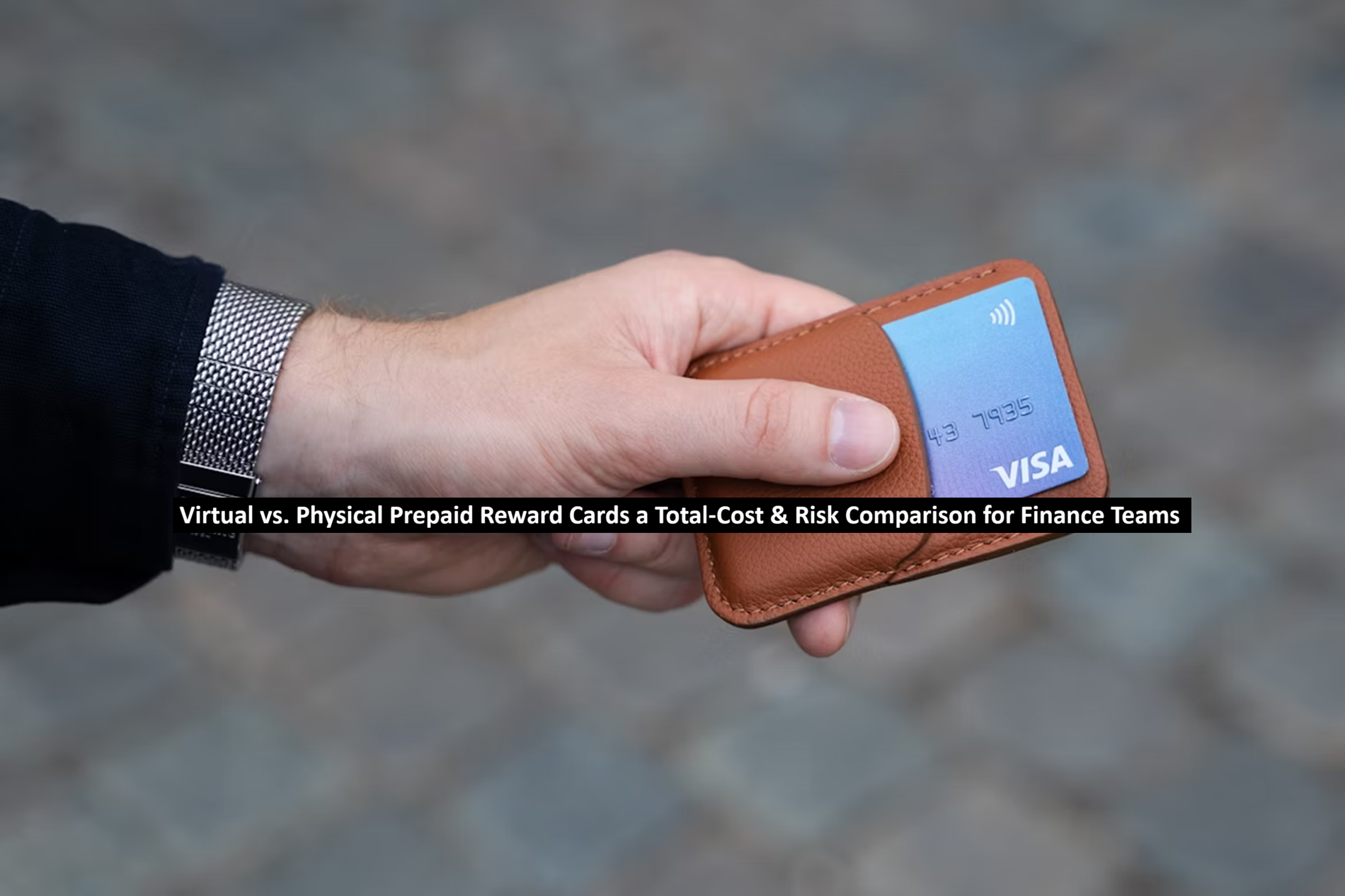
Enter financial reward cards – typically Mastercard or Visa cards that are used like debit cards and loaded with a set amount of money. Employees can spend them almost anywhere and, in essence, choose their reward.
Physical cards are a popular reward option, but now there are also virtual prepaid rewards managed by institutions like Visa and Mastercard, but not tied to a physical card. Employees receive an email with the numbers and security code, and they can either give those numbers to a cashier or shop with them online. They may also be able to add card numbers to digital wallets.
Which type of prepaid card is better – physical or virtual? It depends on the goals of your rewards program and your employees’ preferences.
Read: How AI Development is Transforming Modern Businesses
Benefits of Physical Prepaid Cards
Physical prepaid cards are common, and there are reasons why companies choose them:
- Tangible gifts: There’s something to be said for offering a tangible reward, either in an envelope or wrapped in a small box, and physical cards provide that opportunity.
- Versatile uses: Physical cards are easy to slip into a wallet and use like any debit card. They’re typically accepted worldwide for online and in-person shopping. Some employees may prefer physical cards, especially if they’re not familiar with virtual cards.
- Brandable for your business: Companies can easily imprint physical prepaid cards with logos, which helps improve brand recognition. Also, when employees see the card, they’ll remember where the card came from, which can spark positive associations.
Drawbacks of Physical Prepaid Cards
While physical prepaid cards are widely used, there are some drawbacks, including:
- Environmental impact: Physical cards are made of plastic, which requires environmental resources to make. The cards are typically thrown away after use, so there’s a waste factor. For companies focusing on minimizing their waste and environmental impact, virtual cards may be a better choice.
- Risk of lost or misplaced cards: Since you need the card with you to make a purchase, it can be a hassle if you forget, misplace, or lose your card. Lost cards can be reissued, but that requires time and effort.
- Time and effort to load and issue: Especially if you’re handing out branded cards, they can take time to load and issue, whereas virtual cards can quickly be created and loaded.
Benefits of Virtual Prepaid Cards
Virtual or digital prepaid cards can be used in the same way physical cards can, and they have many benefits, including:
- Ease of loading and use: Employers can quickly and easily load money onto digital cards and issue them electronically. This eliminates production time and effort for employers and makes rewards instantly accessible to employees.
- No risk of card loss: There’s no physical card to misplace or lose. Employees simply store card numbers in their email or digital wallet, and if those numbers are somehow misplaced, employers can easily re-issue them.
- Security: There’s less risk of virtual cards being stolen, as the numbers are stored in the employee’s personal smartphone or computer.

Drawbacks of Virtual Prepaid Cards
Digital cards have their drawbacks, including:
- Barriers to in-person use. Since there’s no physical card to hand to a cashier, employees must be able to access the virtual cards via devices and also have Internet access. Vendors must also be willing to accept them. While most do, some have policies that prevent them from using information encoded in an email or virtual portal.
- Sometimes forgotten. A digital card sometimes gets lost in an email box and forgotten about. Employees can forget they have money to spend, so the reward may go unused.
- Refunds can be difficult. In the rare case that an employee purchases the wrong size or needs a refund for any reason, refunds on digital cards can be difficult. Some stores may refuse refunds and issue only a store credit, especially if the account holding the reward is no longer accessible.
Choosing a Prepaid Card Type
As with other reward program specifics, whether you choose to use a virtual or physical prepaid reward card depends on your company’s goals and your employees’ preferences. You may opt for physical cards, for example, if you host an employee appreciation ceremony and want to hand out a physical gift. You may choose virtual cards for the simplicity of adding more money to cards if your rewards program is ongoing. You may use physical cards in some cases, but virtual ones in others. It’s great to have options!