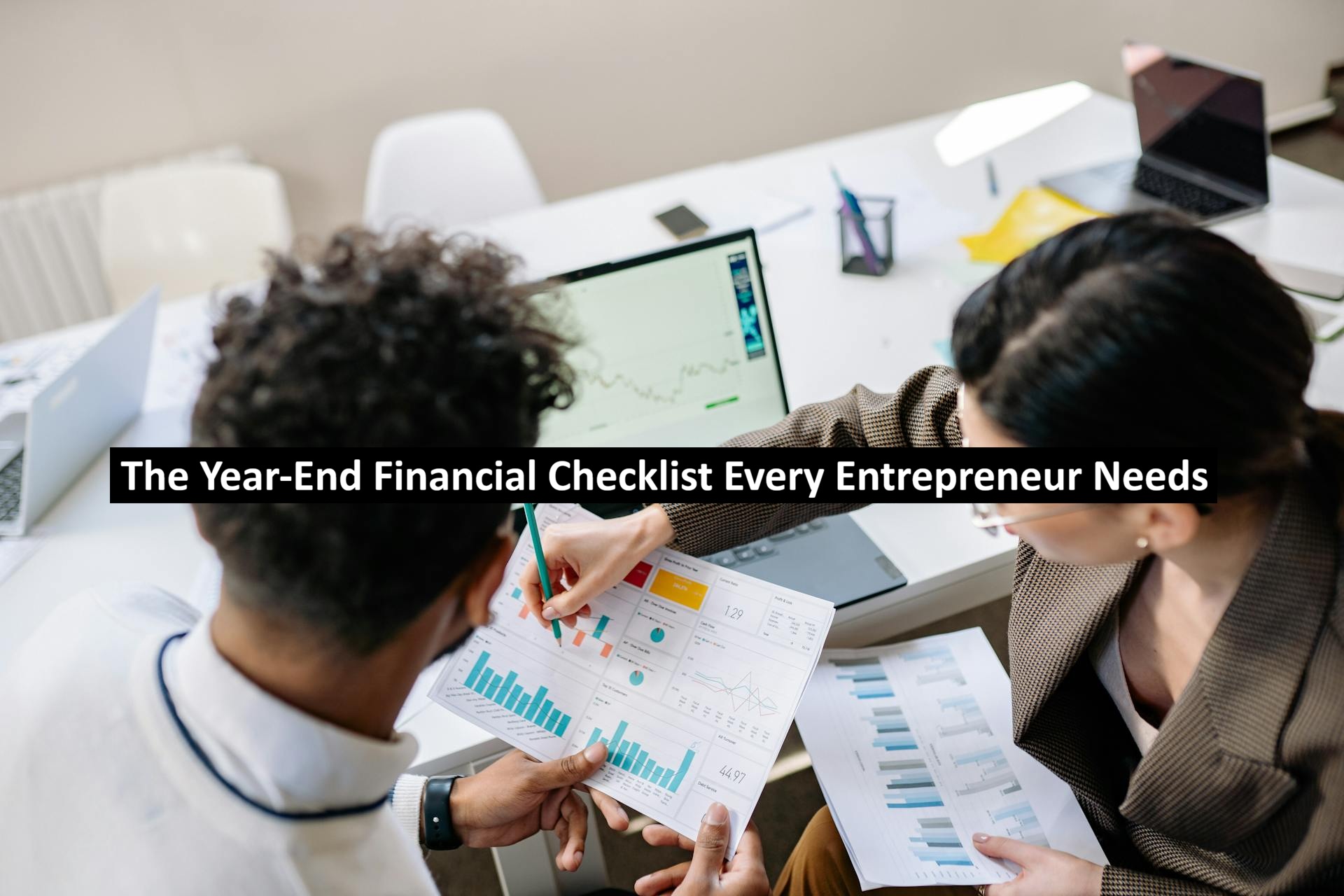
The Year-End Financial Checklist Every Entrepreneur Needs
When the new year arrives, businesspeople usually find themselves in a cyclone of holiday sales, customer projects, and preparations for what comes next. Amidst this madness, it’s easy to put aside the crucial task of conducting a financial review of the past year.
The end of the fiscal year is not only about satisfying the government and paying taxes. It’s also a smart time to assess your company’s condition, fix cash flow problems, and grow your business. This financial checklist is for everyone, whether you are self-employed or have a whole team or organization behind you.
Reconcile Your Books and Clean Up Accounts
You need precise information to make any decisions. The first step is reconciliation. This implies that your management records should match, dollar-for-dollar, your financial institution statements, credit card statements, and merchant account records.
Look for discrepancies such as charging twice for the same thing, subscriptions you cancelled, or checks issued to suppliers that you no longer order from. This is a good time to sort out every expense by category. Misclassified expenses can cause you to miss deductions or give rise to red flags during an audit.
If you have been treating personal and business expenses as the same, this is the right moment to make a distinction, which will make your accounting much more straightforward.
Read: Virtual vs. Physical Prepaid Reward Cards: a Total-Cost & Risk Comparison for Finance Teams
Review Your Profit & Loss Statement
Your P&L statement is the report card of your business. It tells you precisely how much money you made (or lost), and where it went. Don’t just look at the bottom line. Analyze the trends.
- Revenue streams. Which were your best products or services? Which lagged?
- COGS (Cost of Goods Sold). Have your material or labor costs crept up?
- Operating expenses. Where can you cut the fat and save?
Evaluate Your Assets
Beyond physical equipment, like laptops or machinery, are intangible assets and revenue streams. For entrepreneurs in the financial services or payments sector, this may mean assessing the long-term viability of any residual income streams. It’s sometimes better to free up capital than to continue holding onto an asset that grows slowly.
Other business owners may need to sell off outdated inventory at a discount to free up warehouse space and cash, or liquidate unused software licenses.
Tax Planning
Looking over your finances at the year’s end gives you a chance to do something that reduces your taxable income. This can include several areas.
- Defer income. If you are using the cash-basis accounting system, delay sending your invoices for work done in December until the beginning of January.
- Accelerate expenses. If you know you will need new equipment or software next year, buy it before December 31 so you can take the current tax year’s deduction.
- Contributions to retirement accounts. Max out your contributions to either a SEP-IRA or a Solo 401 (k) account.
Always consult with a CPA to ensure your strategies fit your business structure and local tax regulations.
Audit Your Accounts Receivable (AR)
Outstanding invoices are clots that block your cash flow. Generate an aging report to identify who owes you money and how long overdue their payments are. Send polite but clear reminders to customers who haven’t paid. Another option is to give a discount for prompt payment to help your books clear before the year ends. If it turns out the debt is uncollectible, it can then be written off as bad debt expense.
Review Vendor Contracts and Subscriptions
It’s easy to sign up for a $50/month tool or newsletter, then completely forget about it. Line by line, go over your credit card statements. Are you still using that social media scheduler or project management software?
Moreover, look over contracts with key suppliers. The more time you’ve spent as a customer, the greater the possibility of negotiating better conditions or securing advantageous rates before the annual price increases that start in January.
Set Goals For the New Year
Use all that information to create some ambitious but realistic goals. Make them specific. Here are a few suggestions.
- Increase the net margin by 5%.
- Reduce operating costs by 10%.
- Build up a cash reserve sufficient to cover three months’ operating expenses.
- Employ strategic expansion by entering at least one new market.
Understand Your Financial Year

Why sell your merchant services portfolio or other assets? It can be a way to obtain a lump sum of cash you can use for a new pivot or investment as part of your checklist. A year-end financial checklist does more than just close the books on the last 12 months. It opens the door for a successful year ahead. By learning what you can do better and catching costly oversights, you can focus on making proactive improvements. Take the time to get your financial house in order so you can take the next step forward for your business.