Know More About the Hybrid vs. Remote Salesforce Consulting Teams
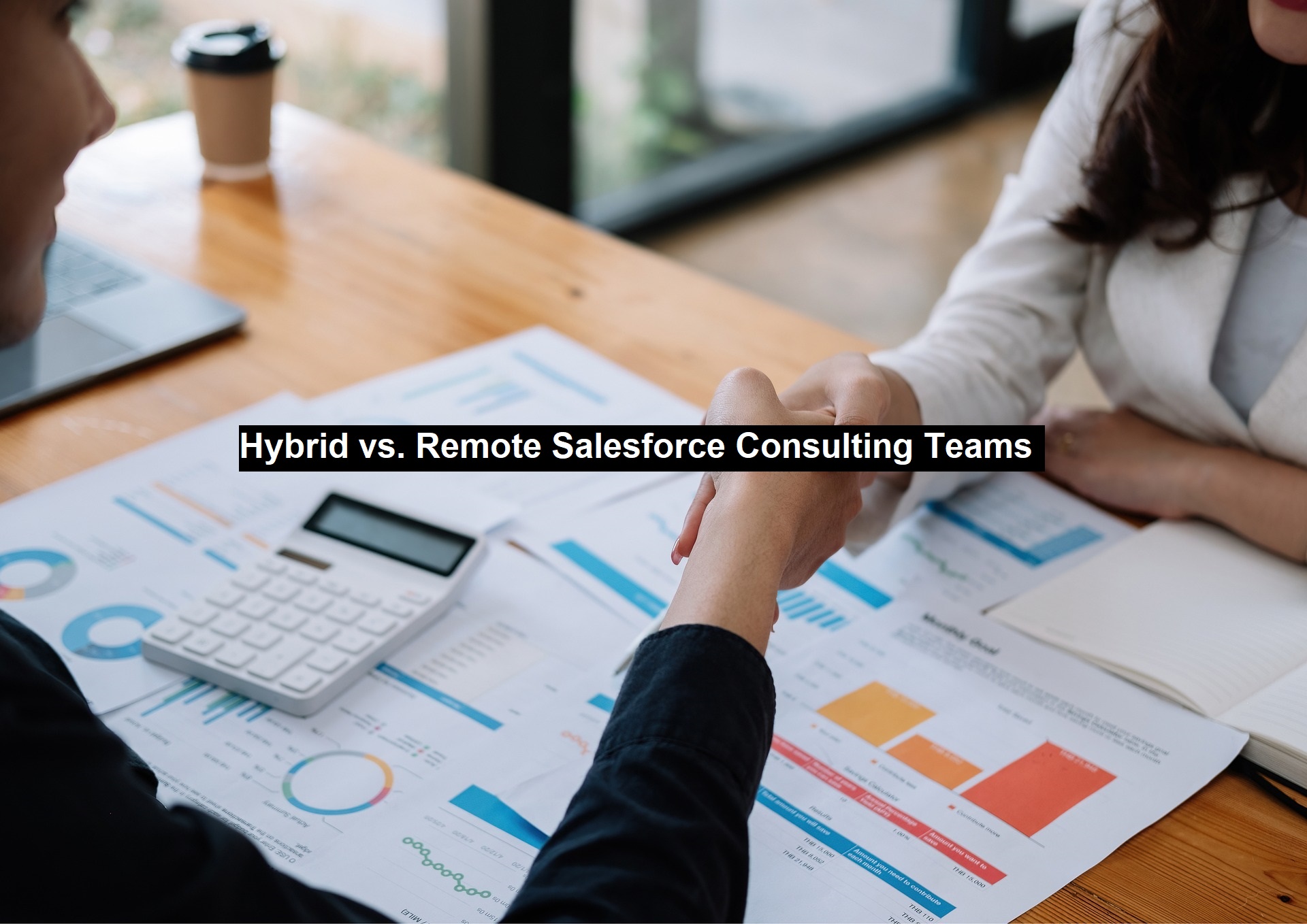
Today’s businesses rely hugely on Salesforce consultants who help in the implementation, optimization, and customization of their Salesforce CRM solutions. With growing demands for business flexibility, organizations are considering different team models. Two of the most popular alternatives today are hybrid and remote teams. This blog post will explore the benefits and challenges of each approach to give you a better understanding of what model would fit your Salesforce consulting practices best.
Managing a Hybrid Team?
A hybrid Salesforce consulting team comprises both in-house and remote team members, combining flexibility, localized knowledge, and collaboration within a single team.
Flexibility and Teamwork
- Hybrid teams, in-house or remote, help immensely with balancing the work-life needs of all its members.
- Pay-per-hit consulting means remote consultants do not need to deal with office distractions.
- On the other hand, in-house consultants can save time by meeting face-to-face for collaborative sessions.
- Hence, with both independence and effective teamwork, these setups enable businesses to tackle complex Salesforce implementations.
Read: Financial Fallout: Why Ignoring Food Waste Costs More Than You Think
Regional Adaptation
- For business consulting on industry regulations or local market challenges, hybrid teams offer the advantage of a localized presence.
- These consultants also bring value, as they are familiar with whether the configuration of Salesforce’s features aligns with local compliance regulations, such as data privacy laws.
- For a company implementing Salesforce in a location with very tight financial regulations, it is beneficial to have consultants working in a hybrid model who understand the local legal landscape.
Budget-Friendly Solutions
- Hybrid teams also help companies reduce overhead costs.
- For starters, with the majority of remote consultants working from home, businesses will significantly reduce their need for spacious office spaces.
- Perhaps even more importantly, the company can hire remote consultants from areas with lower living costs, maintaining quality while keeping its expenses under control.
Managing a Fully Remote Team?
Remote Salesforce consulting teams work entirely from different locations outside the company’s office. This model has gained popularity for the cost efficiency it affords the business, allowing worldwide talent to be accessed and for flexible arrangements to be made.
Wider Talent Pool
- Arguably, the most significant advantage of working with a remote team is worldwide access to talent. Businesses no longer face geographical constraints when hiring Salesforce consultants. Whether they need a Salesforce Marketing Cloud practitioner or a niche developer for manufacturing custom integrations, a remote team helps them acquire the best talent in the world.
- For example, any organization seeking specialized Salesforce consultative expertise, such as custom-developing Salesforce Apex or integrating with a third-party platform, can source any of these consultants regardless of their location.
Increased Productivity
- The productivity of a remote team is generally much higher due to reduced distractions and more flexible hours.
- While consulting, one can work from any environment that they find most comfortable and conducive to productivity.
- Another advantage of remote work is that team members from different time zones can converge and work on a particular project, thereby shortening overall turnaround times and catalyzing delivery.
- For example, being able to work overtime zones with a remote team during the Salesforce project helps meet tight deadlines.
Cost Effective
- The remote team is seen as cost-effective once more, as there is no need for investments in office space, utilities, or overheads. Again, the majority of remote consultants will be from lower-wage countries, thereby reducing the total costs of projects while ensuring competency.
- If your company is tight with its budget, a remote team will offer an affordable means to acquire the requisite Salesforce expertise without compromising quality.
Which is Ideal for Your Team? Hybrid or Remote?
When choosing a hybrid or remote consulting team at Salesforce, it all comes down to the needs, budget, and requirements of your project. Let’s examine some critical aspects.
Budget Aspect
- A remote team is more attractive for cost savings associated with office space and overheads if cost is a primary consideration. There is a mix in a hybrid setting, and costs are incurred from office expenses, while in-person collaboration will still be enjoyed for specific essential tasks.
Availability of Sourcing
- Hybrid teams work best when it comes to local talent while also allowing the company to source human capital from other parts of the world. Additionally, if your company requires localized Salesforce expertise for compliance or regional-specific needs, it can leverage the hybrid model. Meanwhile, a completely virtual team is the ideal setting for tapping into vast talents and special skills that are not available locally.
Time Constraints and Logistics
- Remote teams have some advantages in bringing time-sensitive Salesforce projects to completion more speedily since they tend to work across different time zones, and time will continue ticking away on the project. Hybrid teams would incur more complexity in logistics due to the need for coordination among remote and in-office workers. However, for quick decision-making, the hybrid model may provide an advantage when face-to-face collaboration is needed.
Communication Problems
- Remote teams often face communication challenges due to time zone differences and the predominance of digital tools for communication, such as Slack, Zoom, or other project management software. To alleviate this, hybrid teams can alternate between in-person meetings for improved communication and reduced misunderstandings.
Is the Difference Between Hybrid and Remote Salesforce Consulting Teams Clear Now?
Choosing between hybrid and remote Salesforce consulting services ultimately depends on your business needs. Hybrid teams allow flexibility, regional expertise, and collaboration, while remote teams are cost-effective, give access to a global talent pool, and are more productive. Consider budget, available resources, time constraints, and communication needs when making a decision. Both models produce great results; thus, the structure should be in place according to business goals and specific needs regarding Salesforce projects.