
Investing in Infrastructure: Opportunity and Risk in Global Construction
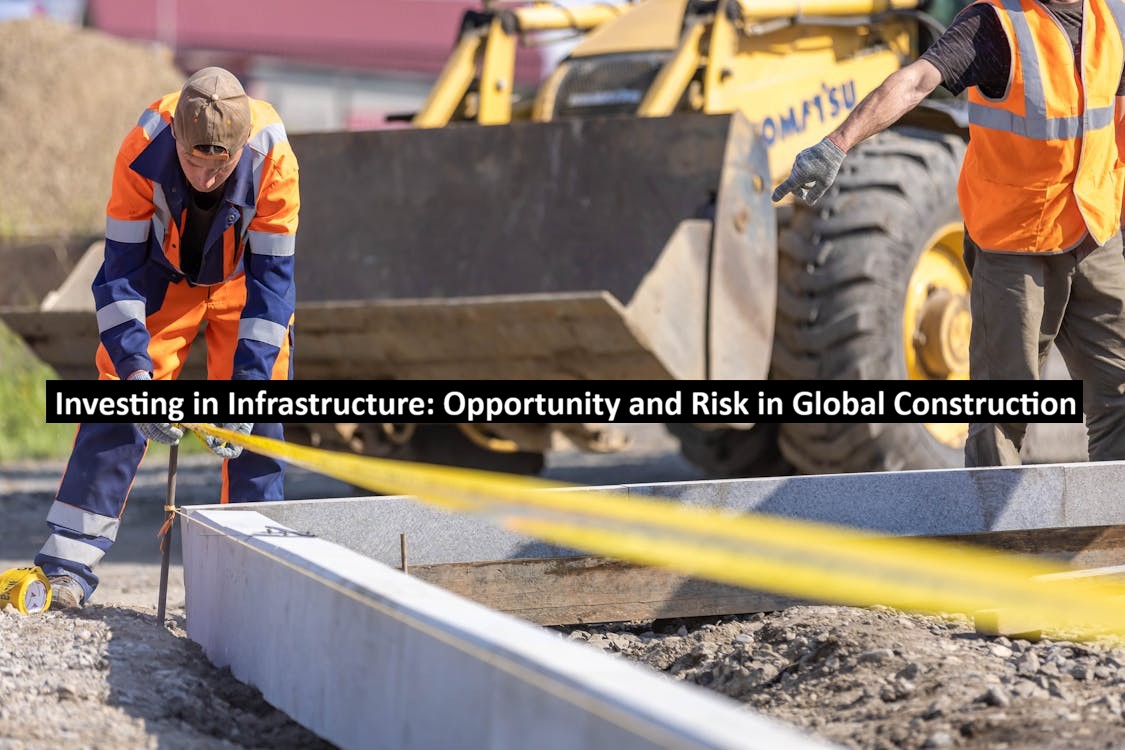
With a renewed focus on construction and trillions being invested in development around the world, you could be forgiven for assuming that everything is moving rather swimmingly in the world of construction.
Sure, there are some positives that we can latch onto: green energy projects, infrastructure upgrades, and increased efficiency from technological innovations are all injecting some much-needed momentum into the global construction industry at the moment.
On the other hand, there’s also an awful lot of uncertainty that’s leaving the industry stuck in the mud and desperately spinning its wheels. Global tariffs imposed by the US government have crippled supply chains as material costs have surged, while skill shortages in most developed countries heavily limit the amount of work that can realistically be done, despite significant demand.
So, whether you’re investing in materials, mines, or construction businesses, we’re going to use this article to delve into the opportunities and threats that the sector at large is facing at the moment.
Opportunities
Increasing Demand for Infrastructure
All over the world, businesses and governments are investing more and more into either upgrading existing infrastructure or developing new systems as a whole. In lots of developing countries, fast-growing urban areas are spurring a lot of the growth, driving the need for new transport systems, utilities, and homes. Meanwhile, in more economically developed countries, outdated infrastructure is in need of much-needed upgrades, especially given that most of these countries have put off a lot of updates because of various financial crises and the pandemic.
An increase in demand for digital infrastructure is also encouraging further growth. Increasing investment in established markets, like improved internet supply via modern wi-fi networks, and in emerging markets, like artificial intelligence via data centres, is spurring the demand for construction in countries all over the world.
Read: How Rural Entrepreneurs Are Building Profitable Agri-Service Businesses
Green Energy
Add green energy infrastructure to that equation, and you wouldn’t be mistaken for thinking that we should be looking at a world in which the high demand for construction means that we can anticipate a prosperous period of rapid growth for the industry at large. Particularly as renewable energy projects (incentivised by state investment and net zero targets), like onshore and offshore wind farms, solar installations, and hydroelectric power are underway – especially in Europe and Asia, where these developments create a variety of revenue streams and investment avenues within the construction sector at large.
Technology and Innovative Working
Just as it does in almost every other industry, technology is continuing to advance the way that construction businesses operate. Modern tools, like BIM (Building Information Modelling) and artificial intelligence, are streamlining project planning from the get-go, while advanced automated machinery and robotics are making project delivery even faster and safer than ever before.
New, innovative ways of working are also making construction processes much more efficient and cost-effective. Plant hire, for example, allows businesses to hire equipment like a digger that would normally be eye-wateringly expensive, as and when they need it, instead of splurging a significant amount of their budget on it before they’ve even set foot on-site.
Key Risks to Investment in Construction
The Elephant in the White House
Chief among the construction ecosystem’s current challenges are rising material costs that have come about as a result of tariffs that have been imposed by the US government. These tariffs have rapidly driven up the prices of materials like copper, timber, steel, and cement, which, in many ways, represent the lifeblood of the sector at large.
As a result, a chain reaction has followed. These higher costs have been passed from suppliers to developers, so when something like copper is held to a 50% tariff and the price skyrockets, manufacturers and traders hoard the materials and cause supply disruptions that, in turn, force businesses around the world to pay even higher prices.
A Lacking Workforce
Skills shortages have been a persistent challenge endured by construction for many years now, especially as the demand for larger-scale projects has continued to rise and the availability of qualified workers hasn’t been able to keep up. This problem has only been exacerbated by ageing populations, as younger professionals aspire to work in service-based industries. This isn’t just creating holes in the workforce on building sites, but also in senior leadership positions.
Inherent Risks in Infrastructure Investment
There are plenty of opportunities for construction when it comes to infrastructure investment, but there is also a boatload of risks that simply come with the territory. The complexity of certain projects, for example, new transport links or power sources, often leads to them falling behind schedule and going over budget, which can negatively influence investor confidence and the potential return on investment.
Along a similar line, infrastructure projects are often at the mercy of government policies, permitting processes and economic factors like interest rates. If there is a sudden economic downturn, for instance, if there was an ongoing conflict in the Middle East, the fallout could spell doom for potential projects, which could become even less popular if people are generally worse off.
Closing Thoughts
Overall, it’s a rather confusing time to be an investor – especially when you’re taking a look at the construction industry. It’s a bit of a headscratcher because the world is seemingly more volatile than ever, while at the same time, the sector should be poised for success.
With demand through the roof and more streamlined processes, thanks to innovative technologies and new operational systems, like the aforementioned digger hire scenario, this ought to be straightforward. But it never is – especially with a staffing crisis and the usual risks, it’s unclear just how this will pan out for investors and owners in construction.